


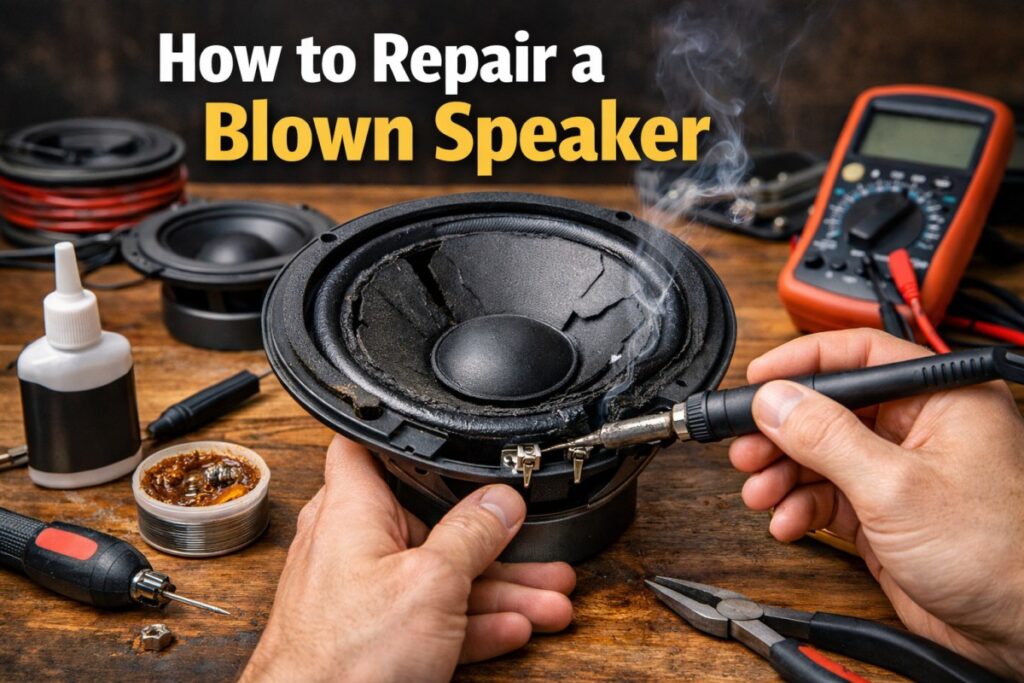
A blown speaker can be frustrating—especially when you’ve invested in high-quality audio equipment, and the sound suddenly becomes distorted, weak, or completely silent. Many music lovers think that replacing the speaker is the only solution, but this isn’t always the case. Knowing how to fix damaged audio equipment will help you save money and better understand the audio system.
Here at Ultimate Audio AZ, we carry the best speakers from brands such as Alta Audio, and one of the most frequent concerns we get is whether a damaged speaker can be repaired or replaced. The answer depends on the type of damage, the speaker’s value, and your comfort level with simple repairs.
This guide explains how to fix a damaged speaker in a simple, practical way, even without an audio professional.
What Does It Mean When a Speaker Is Blown?
Before you can learn how to fix the damaged speaker, it is essential to know what “blown” actually means.
A speaker that is blown typically is a result of damage to some or all of these places:
- Cracked or torn speaker cone
- Damaged or burned voice coil
- A separate surround (foam or edge of rubber)
- Terminals or loose wiring
There aren’t any critical issues with the speakers. Some problems are minor and are surprisingly simple to fix.
Common Signs of a Blown Speaker
Recognizing the issue early can make fixing a damaged speaker much simpler.
Common symptoms are:
- Crackling or distorted sound
- The buzzing can be heard at certain frequencies.
- The output is muffled or low.
- Absolutely no sound
- The bass drum rattles when it hits
In the event that the Alta Audio speakers or other premium speakers exhibit these warning signs, you should stop using them immediately to avoid any further harm.
What Causes a Speaker to Blow?
Knowing the root cause is essential to repairing a faulty speaker correctly.
The most frequently cited causes are:
- Music played at an excessively high volume
- Mismatched or underpowered amplifiers
- Signals that are clipped or damaged
- Age-related or physical damage
- Exposed to heat or moisture
Most speaker problems are gradual rather than sudden, so repair is usually feasible.
Tools You’ll Need to Repair a Blown Speaker
Before you begin the repair, collect the following basic tools:
- Screwdriver set
- Multimeter
- Speaker repair glue
- Cone or surround replacement (if necessary)
- The soldering iron is used to melt solder and solder components.
- Cleansing cloth and soft brush
The right tools make repairing a damaged speaker more efficient and safer.
Step-by-Step: How to Repair a Blown Speaker
Step 1: Remove the Speaker Driver
Remove the speaker from its cabinet. Label the wires so you can remember where they connect. This is crucial for learning how to fix a damaged speaker without causing additional damage.
Step 2: Inspect the Cone and Surround
Be sure to look for:
- The cone may have holes, tears, or tear-filled spaces.
- Foam surround that is crumbling or cracked
Small cone tears can be patched. However, damaged surrounds are usually replaced.
Step 3: Check the Voice Coil
Utilize a multimeter to measure resistance. If the results indicate an open circuit, the voice coil may be burning out. Damage to the voice coil is among the most difficult components to repair in a failed speaker, and professional repair may be advisable for high-end models.
Step 4: Repair or Replace the Surround
Kits for replacing surrounds can be readily available. Remove the old surround, clean the edges, and carefully glue the new surround into place. This is among the most popular and efficient repair methods for speakers.
Step 5: Patch Minor Cone Damage
For tears of a small size:
- Use flexible speaker glue
- Reinforce with thin sheets of paper or fabric.
- Dry completely
This technique is great for minor problems and can be an effective way to fix a blown speaker at home.
Step 6: Reassemble and Test
Connect the wires, install the speaker, and listen at a low volume. Gradually increase the volume until the repair works.
When Should You NOT Repair a Blown Speaker?
Although it’s beneficial to understand how to fix damaged speakers, this isn’t always the most effective option.
Avoid DIY repair if:
- Voice coils are badly burned
- The magnet is damaged.
- The speaker is covered by warranty.
- The speaker is a premium audiophile model.
For high-quality speakers, such as Alta Audio, professional repair or replacement will ensure performance remains consistent with the original specifications.
Repair vs Replacement: What’s the Better Choice?
This is among the most common questions about repairing an exploded speaker.
Repairs are most effective when:
- The damage isn’t too serious.
- Repair parts are inexpensive.
- Speakers have sentimental or valuable items.
The best replacement is in the following situations:
- Many components are damaged
- Repair costs are close to the replacement cost.
- You’d like to see better performance.
We at Ultimate Audio AZ help our customers determine what makes the most sense for their particular system and listening needs.
How to Prevent Blown Speakers in the Future
After you’ve learned to repair a failed speaker, preventive maintenance becomes equally crucial.
Tips for protecting your speakers
- Find speakers that match the right amplifier power
- Avoid maxing out volume levels.
- Use clear and distortion-free audio sources.
- Make sure that your speakers are away from water.
- Make sure you have adequate ventilation.
A few good habits can prolong the lifespan of speakers for several years.
Also, check how long do you have to break in speakers
FAQs About How to Repair a Blown Speaker
1. Can a damaged speaker be fixed?
Yes, many audio components can be restored, particularly if the damage was limited to the cone or surround. Severe voice coil damage may require professional service.
2. What is the cost to fix a speaker that has blown?
Repair costs differ; however, basic repairs to the surroundings can be inexpensive. Premium speakers can be more expensive due to the specialized components.
3. What can I tell when my speaker has been damaged or is just damaged?
A damaged speaker usually causes continuous distortion even at low volumes. A test with a different speaker may help determine the cause.
4. Can you play a speaker once it’s blowing up?
No. Continuous use could harm both the speaker and the amplifier.
5. Do I need to repair or replace premium speakers?
For top-of-the-line brands such as Alta Audio, professional repair or expert consultation is often the best way to preserve high-quality sound.
Final Thoughts
Understanding how to repair a failed speaker can give you peace of mind about your sound system and give you control. While not every speaker can be repaired at home, the majority of problems can be fixed with a little patience and the proper method.
If you’re using a high-performance speaker such as Alta Audio, or if you’re unsure whether repair is the best option, Ultimate Audio AZ is here to assist. If you’re looking to repair, upgrade, or build a brand-new system, sound quality always comes from making informed decisions.