


When searching for the best audio speakers, many focus on brands, power ratings, or prices. However, one among the more crucial, yet often misunderstood requirements is the sensitivity of speakers. If you truly want powerful sound, better efficiency, and cleaner audio — especially when pairing speakers with quality amplifiers like Tonewinner — understanding what is considered high sensitivity for speakers is essential.
At Ultimate Audio AZ, we work with audiophiles who seek clarity, volume, and efficiency without exceeding their system’s maximum. In this article, we’ll go over the meaning of high sensitivity, why it’s important, and how it impacts the quality of your audio.
What Is Speaker Sensitivity?
The sensitivity of speakers measures the volume a speaker can produce with the same quantity of energy. It is typically stated as follows:
DB SPL (decibels sound pressure level) at 1 watt power from 1 meter away
For instance, a speaker rated at 90 dB of sensitivity produces 90 dB of sound with only 1 Watt of power at 1 meter.
This specification addresses the following question:
How effectively does the speaker transform power into sound?
What Is Considered High Sensitivity for Speakers?
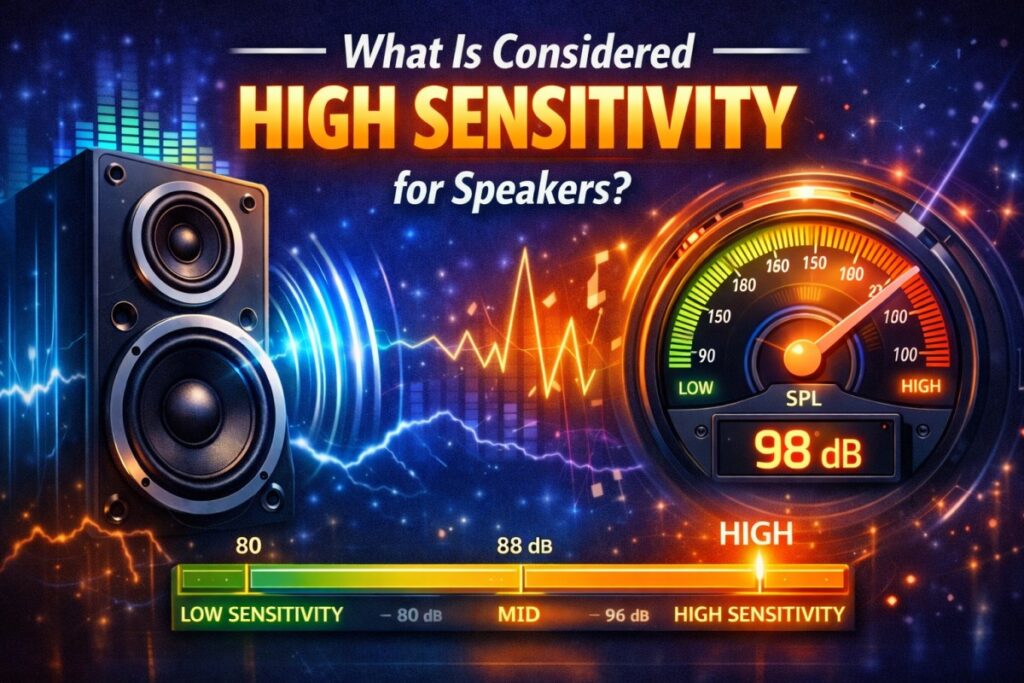
In general, sensitivity to sound is classified as follows:
- Low Sensitivity: Below 86 dB
- Average Sensitivity: 86 dB – 89 dB
- High Sensitivity: 90 dB – 94 dB
- Extremely High Sensitivity 95dB or higher
What is considered high sensitivity in audio speakers?
Any speaker rated at 90 dB or higher is commonly considered high-sensitivity.
These speakers deliver more powerful audio with less power, making them ideal for home audio systems and the most upscale listening spaces.
Why High Sensitivity Speakers Matter
Knowing what constitutes high sensitivity in speakers helps you make better decisions when designing an audio system. This is why the sensitivity of high quality is important:
1. Louder Sound With Less Power
High-sensitivity speakers don’t require much power to be effective. Even amplifiers with low to mid power can effortlessly drive them, with incredible volume levels.
2. Better Amplifier Compatibility
High-sensitivity speakers pair well with top amplifiers such as Tonewinner, providing better dynamics and greater headroom without distortion.
3. Improved Sound Clarity
Since the amplifier doesn’t work as hard, the sound stays clear, controlled, and precise, even in the most dynamic of passages.
4. Energy Efficiency
Using less power means lower energy consumption and reduced heat buildup, thereby extending the equipment’s lifespan.
How Speaker Sensitivity Affects Real-World Listening
To understand exactly what constitutes high sensitivity in speakers, let’s examine an actual comparison:
- The Speaker with 90 decibels requires just half its power to achieve the same level of loudness as an 85 dB speaker.
- A speaker with a 93 dB rating requires just one-quarter the volume of a speaker with 87 dB.
The difference is significant with higher volume or in large rooms. Speakers with high sensitivity perform better and are more comfortable to use.
High Sensitivity vs High Power Handling
A lot of people confuse sensitivity with power handling, but they’re different things.1
- Sensitivity means how loud a speaker is with just power
- The power of the speaker means how much power a speaker can handle safely
A speaker may possess high power handling; however, it has low sensitivity. This means it will require a powerful amplifier to sound powerful. Speakers with high sensitivity, however, do not rely on brute-force wattage to deliver.
Are High Sensitivity Speakers Always Better?
While high-sensitivity speakers offer many advantages, choosing the “best” option depends on your audience’s needs.
High-sensitivity speakers are perfect for:
- You’d like a bigger sound but less power
- You want dynamic, efficient audio
- High-quality amplifiers are used.
- You appreciate clarity and real-world reality.
Speakers with lower sensitivity may be used when:
- Already have a powerful amplifier
- You listen at moderate volumes
- Size and space for speakers are both limited.
At Ultimate Audio AZ, we help our customers select speakers that complement their room and amp to ensure optimal performance.
Room Size and Sensitivity: Why It Matters
When you’re considering using speakers for a big room or home theater, understanding what’s called high sensitivity in speakers is more vital.
- Larger rooms require more volume
- Distance decreases the perceived loudness
- Speakers with high sensitivity adjust naturally and without strain
This is why many audiophiles choose speakers with 92 dB or higher for a wide listening space.
How High Sensitivity Speakers Pair With Tonewinner Amplifiers
Tonewinner amplifiers are engineered to deliver clean power, precise control, and dynamic range. When combined with high-sensitivity speakers:
- You get effortless volume
- Ample headroom for dynamic sound effects
- Lower distortion at higher levels
- Better micro-details for movies and music
This combo delivers a full listening experience without straining your system.
Common Myths About High Sensitivity Speakers
Myth 1: High Sensitivity Means Poor Sound Quality
False. Modern high-sensitivity speakers offer exceptional detail, accuracy, and tonal balance.
Myth 2: They’re Only for Loud Music
It’s not true. High-sensitivity speakers perform better in low volumes, preserving clarity and detail.
Myth 3: Bigger Speakers Always Have Higher Sensitivity
While size is helpful, design, materials, and efficiency are more important than just size.
How to Choose the Right Sensitivity Level
If you are deciding on what high-sensitivity speakers to use in your set-up take into consideration:
- The power of your amplifier
- Room size
- Habits of listening
- Speaker position
If you’re not sure what you need, our team of experts at Ultimate Audio Arizona can help you find the ideal amplifier and speaker for your needs.
Also, check How to Make Speakers Louder Without Losing Sound Quality
Frequently Asked Questions (FAQs)
What dB rating is ideal for home speakers?
For the majority of home configurations, 90 dB to 92 dB is the ideal range, providing the best volume, efficiency, and clarity without requiring much power.
Are high-sensitivity speakers suitable for low-power amplifiers?
Yes. High-sensitivity speakers work well with low- to mid-power amplifiers because they can produce more sound with less wattage.
Do high-sensitivity speakers help reduce electricity use?
Yes. Since they need less power to operate, use less energy, and put less strain on amplifiers.
Do higher sensitivity speakers always sound louder?
At the same level of power, yes. Speakers with higher sensitivity will always be louder than those with lower sensitivity, even when driven by the same power.
Final Thoughts
The question is, what is considered a high-sensitivity speaker?
Anything that is 90 dB or more is considered to be high sensitivity. Selecting speakers with this level will dramatically enhance the quality of your music.
High-sensitivity speakers deliver greater sound, higher efficiency, improved clarity, and seamless integration with premium amplifiers such as Tonewinner. When you’re creating a home audio system or upgrading your existing setup, knowing your speakers’ sensitivity will bring you a step closer to achieving the perfect audio.