


Music can sound completely different when reproduced through a carefully designed audio system. From the subtle details in a vocal performance to the depth of bass and separation between instruments, the right equipment can make listening more engaging and enjoyable.
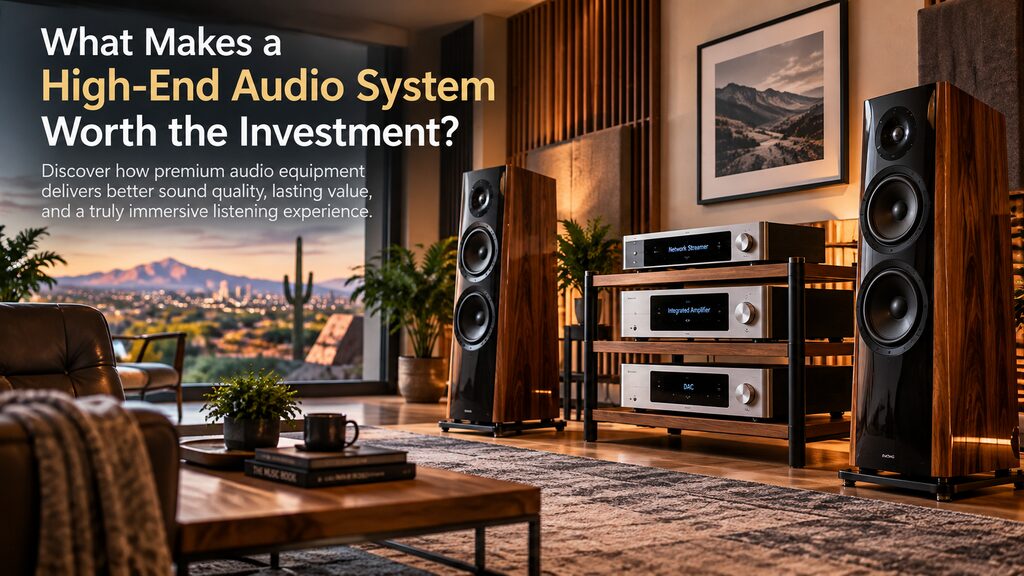
But is a high-end audio system really worth the investment?
For music enthusiasts, audiophiles, and homeowners looking to improve their listening experience, the answer depends on sound preferences, equipment quality, room acoustics, and budget. Premium audio equipment is not simply about spending more money. It is about choosing compatible components that work together to reproduce music with clarity, balance, and detail.
In this guide, we explore what makes a high-end audio system different, which components matter most, and how to determine whether investing in premium home audio is the right choice for you.
What Is a High-End Audio System?
A high-end audio system is designed to deliver high-quality music reproduction through carefully selected and matched audio components. Depending on the listener’s needs, it may include premium speakers, an integrated amplifier, a digital-to-analog converter (DAC), a music streamer, and other source components.
Unlike systems selected primarily for convenience or maximum volume, a high-performance stereo system often prioritizes tonal accuracy, low distortion, dynamic range, instrument separation, and a convincing stereo image.
A typical high-end audio system may include:
- High-performance speakers: Reproduce vocals, instruments, bass, and treble across the audible frequency range.
- Integrated amplifiers: Provide the amplification and control needed to drive compatible speakers.
- Digital-to-analog converters: Convert digital audio signals into analog signals for playback.
- Network music streamers: Connect compatible audio systems to digital music libraries and streaming services.
- Audio cables and interconnects: Connect the components and support reliable signal transmission.
- Source components: Supply music from digital files, streaming platforms, turntables, or other compatible devices.
Not every system needs every component. The best configuration depends on your existing equipment, listening habits, and preferred music sources.
7 Reasons a High-End Audio System Can Be Worth the Investment
1. More Detailed and Balanced Sound
One of the main reasons people explore premium audio equipment is the opportunity to improve sound quality.
A well-designed system can reproduce subtle musical details, distinguish individual instruments, and present vocals with greater clarity. Depending on the equipment and recording, listeners may also notice improved bass definition and a more balanced presentation across different frequencies.
However, the result depends on the entire system. A premium speaker paired with an unsuitable amplifier or placed poorly in a room may not perform as intended.
The goal should be a balanced setup in which each component supports the performance of the others.
2. A More Realistic Listening Experience
A well-matched stereo system can create a convincing sense of space between instruments and performers.
This quality, often described as soundstage and imaging, can make music feel more spacious and organized. Instead of hearing every sound as coming from two speakers, listeners may perceive a more defined arrangement of instruments across the recording.
Speaker design, placement, room acoustics, recording quality, and listening position all influence this experience.
For people who enjoy focused music listening, these characteristics can make familiar recordings more engaging.
3. Better Compatibility With Different Music Sources
Modern listeners use a variety of music sources, including streaming services, digital libraries, computers, and turntables.
A thoughtfully configured high-end audio system can accommodate the sources that matter most to you.
For example, a network music streamer can provide convenient access to compatible streaming services, while a suitable DAC can support digital playback from compatible devices. An analog input may be useful for a turntable or another analog source.
Before purchasing new equipment, identify the connections and features you actually need. Buying components with unnecessary features can increase costs without improving your everyday listening experience.
4. Greater Flexibility for Future Upgrades
A carefully planned high-end stereo system can be upgraded gradually rather than replaced entirely.
You might begin with suitable speakers and an integrated amplifier, then add a music streamer or another source component when your needs change.
Modular systems can offer flexibility, provided the components remain compatible and the proposed upgrade addresses a genuine limitation.
Before making an upgrade, consider whether the biggest improvement would come from the speakers, amplification, source equipment, room setup, or listening environment. Replacing expensive components without identifying a specific problem may deliver little noticeable benefit.
5. Equipment Designed for Long-Term Use
Build quality, serviceability, component availability, and manufacturer support can all influence the long-term value of premium audio equipment.
Some well-maintained amplifiers, speakers, and other components can remain useful for many years. However, longevity is not guaranteed, and electronic components, software-dependent features, and physical parts may eventually require maintenance or replacement.
When comparing equipment, review the manufacturer’s specifications, warranty terms, support options, and expected maintenance requirements.
Choosing a reliable component that suits your needs can be more valuable than selecting a product based only on its price or appearance.
6. A System Tailored to Your Listening Space
Your room plays an important role in how your audio system sounds.
Room dimensions, furniture, wall surfaces, ceiling height, and speaker placement can influence bass response, reflections, and stereo imaging.
A high-end audio system should therefore be selected for the space in which it will be used.
Large floorstanding speakers may suit some spacious rooms, while bookshelf speakers may be more practical for smaller spaces. Neither option is automatically superior in every environment.
Consider your available space, listening distance, preferred volume, and room layout before selecting equipment. Appropriate speaker placement and basic acoustic improvements can sometimes produce more noticeable benefits than purchasing a more expensive component.
7. Greater Enjoyment of Your Favorite Music
The most meaningful benefit of a high-end audio system is the listening experience it provides.
Music enthusiasts may appreciate clearer vocals, more convincing instrument separation, controlled bass, and a presentation that makes them want to spend more time listening.
The value is personal. Someone who listens to music casually may be completely satisfied with a compact wireless speaker, while an enthusiast who regularly listens to albums in a dedicated room may appreciate a more sophisticated stereo setup.
The right investment is the one that delivers a worthwhile improvement for your individual needs and budget.
Which Components Matter Most in a High-End Audio System?
Building an audiophile sound system involves more than choosing products with premium price tags. Each component should serve a clear purpose.
High-Performance Speakers
Speakers have a significant influence on the overall sound of a stereo system. When comparing options, consider frequency response, sensitivity, impedance, cabinet design, and suitability for your room.
You should also evaluate how speakers reproduce the types of music you enjoy. Listening to familiar recordings can help you compare tonal balance, vocal clarity, bass performance, and stereo imaging.
At Ultimate Audio AZ, music enthusiasts can explore speakers from Alta Audio, subject to current product availability.
Integrated Amplifiers
An integrated amplifier combines preamplification and power amplification in one component, making it a practical option for many stereo systems.
When choosing an amplifier, consider its power output, compatibility with your speakers, available inputs, and any digital or streaming features you require.
Bel Canto and Tonewinner are among the amplifier-related brands featured on the Ultimate Audio AZ website.
Digital-to-Analog Converters and Music Streamers
Digital audio equipment can be important if you listen primarily through streaming services or digital music libraries.
A DAC converts a digital audio signal into an analog signal, while a music streamer provides a way to access compatible network-based music sources. Some products combine these functions with amplification, so check the specifications before buying separate devices.
The right setup should match your existing sources and avoid unnecessary duplication of features.
Cables and Interconnects
Cables and interconnects connect speakers and audio components. Their specifications, connector quality, length, and suitability for the equipment should be considered when assembling a system.
Reliable cables are important, but expensive cables are not automatically better in every setup. Prioritize compatibility, proper construction, and dependable connections before spending more on accessories.
Is Premium Audio Equipment Better Than Budget Audio Equipment?
Premium audio equipment can provide meaningful advantages in some situations, but price alone does not determine sound quality.
A well-designed, sensibly priced system may outperform a more expensive system that is poorly matched or incorrectly configured.
When comparing products, consider:
- Performance: Does the equipment deliver the sound characteristics you prefer?
- Compatibility: Will it work correctly with your existing speakers and sources?
- Room suitability: Is it appropriate for your listening environment?
- Features: Does it offer the connectivity and functionality you need?
- Build and support: Are the warranty, service, and maintenance arrangements suitable?
- Overall value: Does the improvement justify the additional cost?
Whenever possible, compare equipment using familiar music and similar listening levels. This can help you make a decision based on your own preferences instead of relying solely on marketing claims or specifications.
How Much Should You Spend on a High-End Stereo System?
There is no universal budget for a high-end audio system. Costs vary according to the speakers, amplifier, source equipment, room requirements, and level of performance you want to achieve.
Instead of allocating your entire budget to one premium component, consider the cost of the complete setup.
Start by identifying the features you need, the room in which the system will operate, and the equipment you already own. You may be able to reuse compatible components rather than replacing everything.
It is also sensible to reserve some budget for essential accessories, potential maintenance, and future upgrades.
A balanced system that meets your listening needs is generally a more practical investment than purchasing expensive equipment simply because it belongs to a premium category.
Why Consider Ultimate Audio AZ for Your Home Audio Needs?
Choosing the right components can be challenging when different manufacturers offer different designs, features, and specifications.
Ultimate Audio AZ provides a selection of high-performance audio products for music enthusiasts, including equipment from Bel Canto, Alta Audio, Tonewinner, Cardas Audio, and NuPrime Audio.
Whether you are planning a new stereo system or considering an upgrade, reviewing your existing equipment, preferred music sources, listening space, and budget can help narrow your choices.
You can explore the available product categories and contact the team to discuss your requirements or arrange a listening-room appointment.
The aim is to choose equipment that works together effectively and suits the way you enjoy music.
Final Verdict: Is a High-End Audio System Worth It?
A high-end audio system can be worth the investment if sound quality, focused music listening, system flexibility, and long-term usability are important to you.
The biggest benefits come from selecting compatible components, understanding your room, and choosing equipment that addresses your actual needs. Spending more does not guarantee a better experience, but thoughtful system design can help you get more from your music.
Before making a purchase, compare suitable speakers, amplifiers, and source components, and listen to different options when possible.
If you are exploring premium home audio, Ultimate Audio AZ can help you learn more about its available equipment and identify options for your listening setup.
Call (520) 495-9091 or visit Ultimate Audio AZ online to discuss your audio requirements.
Frequently Asked Questions
What makes a high-end audio system different from a regular sound system?
A high-end audio system typically focuses on sound reproduction, component compatibility, build quality, and listening performance. The actual improvement depends on the equipment, room, source material, and system setup.
Is a high-end audio system worth the money?
It can be worthwhile for listeners who value detailed music reproduction and regularly enjoy focused listening. The right choice depends on your budget, expectations, and how much improvement you perceive compared with your current setup.
What equipment do I need for an audiophile sound system?
A basic stereo system typically requires speakers, suitable amplification, and a music source. Depending on the equipment, you may also need a separate DAC, network streamer, cables, or other components.
Which component should I upgrade first?
Start by identifying the biggest limitation in your existing system. Speakers, room acoustics, placement, amplification, and source equipment can all affect performance, so the best upgrade varies from one setup to another.
Are expensive audio cables necessary for a high-end audio system?
Not necessarily. Choose cables with suitable specifications, reliable construction, and compatible connectors. Higher prices do not automatically translate into a noticeable improvement in sound quality.
Can a high-end audio system work in a small room?
Yes. The important factors include speaker design, listening distance, room acoustics, and appropriate placement. Compact speakers may be a suitable option for smaller listening spaces.
Which brands does Ultimate Audio AZ feature?
Ultimate Audio AZ features brands including Bel Canto, Alta Audio, Tonewinner, Cardas Audio, and NuPrime Audio. Contact the store to confirm current product availability and specifications.