


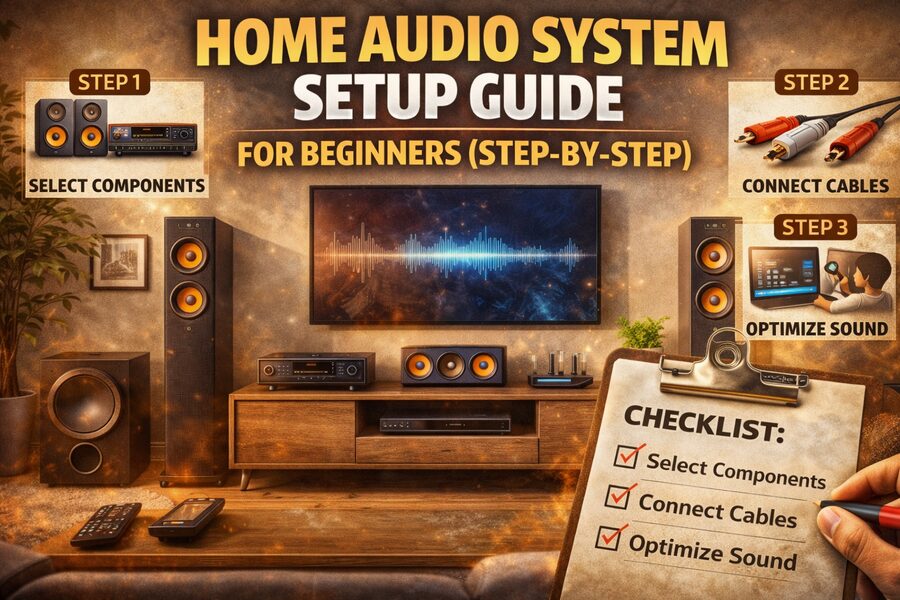
Have you ever walked into someone’s living room and been completely blown away by the sound quality of their audio setup? The kind of rich, immersive audio that makes music feel like a live performance and movies feel like you’re sitting right in the theater? That experience doesn’t have to belong to someone else. Whether you’re a first-time buyer or someone who’s been putting off the project for years, setting up a home audio system is more approachable than most people think — and the results are absolutely worth it.
This guide is written specifically for beginners. No jargon, no assumptions, just clear steps that walk you through everything from choosing the right components to placing your speakers for the best possible sound.
Why a Home Audio System Is Worth the Investment
Let’s be honest — built-in TV speakers just don’t cut it. Even high-end televisions with premium displays produce flat, tinny sound that doesn’t match the visual experience at all. A proper home audio system fills the room with sound that has depth, texture, and presence.
Beyond entertainment, a well-designed audio setup transforms how you experience music at home. Streaming a playlist through quality speakers hits differently than earbuds. There’s something deeply satisfying about music that fills a room naturally—you feel it, not just hear it.
Step 1: Understand the Basic Components
Before you buy a single thing, get familiar with what goes into a home audio system setup. Most beginner systems consist of the following:
Receiver or Amplifier — This is the brain of your system. It takes audio signals from different sources and sends them to your speakers. A good AV receiver also handles video switching if you’re building a home theater setup.
Speakers — The most important piece of the puzzle. Speakers come in many forms — bookshelf, floor-standing, in-wall, and satellite. For beginners, a simple stereo pair (left and right) is a great starting point.
Source Device — This is whatever plays the audio: a TV, a streaming device, a turntable, a CD player, or even your smartphone.
Cables and Connections — Often overlooked, but proper speaker wire and audio cables make a real difference in signal quality.
Step 2: Set a Realistic Budget
You don’t need to spend a fortune to build a system that sounds incredible. A beginner home audio system can be put together for anywhere between $300 and $1,000 and still outperform most commercial setups.
Start with a basic stereo system — two speakers and an amplifier or receiver. As your interest grows, you can always expand into surround sound. It’s much better to start smaller and upgrade gradually than to overspend on components you’re not ready to appreciate or configure properly.
Step 3: Choose the Right Speakers for Your Space
Room size matters more than most people realize. A small bookshelf speaker that sounds stunning in a 10×12 bedroom might completely disappear in a large open-plan living room.
Here’s a general guide:
- Small rooms (bedrooms, offices): Bookshelf speakers work perfectly and offer excellent imaging.
- Medium rooms (living rooms): Consider a bookshelf pair with a subwoofer for added bass.
- Large rooms: Floor-standing speakers or a full surround sound system will fill the space properly.
When choosing speakers, listen to your gut as much as the specs. Frequency response and sensitivity ratings are helpful, but your ears are the final judge.
Step 4: Position Your Speakers Correctly
This is where a lot of beginners make costly mistakes — not in what they buy, but in how they set it up. Poor placement can make even expensive equipment sound mediocre.
For a standard stereo home audio setup, follow this rule of thumb:
Place your two speakers and your listening position in an equilateral triangle. Each speaker should be angled slightly inward (called “toe-in”) so they point toward your ears. Keep them away from walls when possible to reduce unwanted bass buildup. Avoid placing speakers in corners unless they’re specifically designed for it.
Height also matters. Tweeters — the small drivers that handle high-frequency sounds — should be at ear level when you’re seated. This gives you the clearest, most detailed soundstage.
Step 5: Connect Everything Properly
Once your components are chosen and your speakers are positioned, it’s time to wire everything up. Here’s the basic connection flow for a beginner setup:
- Connect your source device (TV, turntable, or streaming device) to your receiver using the appropriate cables—HDMI, optical, RCA, or 3.5mm, depending on your devices.
- Run speaker wire from the receiver’s speaker terminals to each speaker. Make sure you match positive (+) to positive and negative (-) to negative on both ends.
- Double-check all connections before powering on.
Keep cables organized and tucked away where possible. It’s not just about aesthetics—loose or tangled cables can pick up interference that degrades sound quality.
Step 6: Configure Your Receiver Settings
Once everything is powered on, spend some time going through your receiver’s settings. Most modern AV receivers come with an auto-calibration feature—often called YPAO, Audyssey, or MCACC depending on the brand—that uses a microphone to measure your room’s acoustics and automatically adjust the sound.
If your receiver doesn’t have auto-calibration, manually set the following:
- Speaker size (small or large, based on your speakers’ bass capability)
- Crossover frequency (usually 80Hz for most bookshelf setups with a subwoofer)
- Volume levels for each channel to ensure balanced sound across the room
Step 7: Add a Subwoofer for Deeper Bass
If you love movies or bass-heavy music, a subwoofer is a game-changer. It handles the low-end frequencies that regular speakers simply can’t reproduce—the kind of deep rumble you feel during an action scene or a bass drop in music.
Subwoofers are typically self-powered (active), meaning they have their own amplifier built in. Connect them to your receiver’s subwoofer output using a single RCA cable, set the crossover frequency, and adjust the volume to blend naturally with your main speakers.
Placement tip: Subwoofers are more flexible than most people think. Because low frequencies are non-directional, you have some freedom in where you place them. The corner of a room naturally amplifies bass, which is great—just don’t overdo it, or things can get muddy.
Step 8: Fine-Tune and Trust Your Ears
After the initial setup, the real fun begins: listening and adjusting. Play music you know well and notice where the sound feels “off.” Is the bass too heavy? Are the highs too sharp or too dull? Small tweaks to EQ settings, speaker positioning, or even room furniture can dramatically improve the overall sound.
One often-forgotten factor is room acoustics. Hard surfaces like bare walls and floors reflect sound and create echo, while soft surfaces like rugs, curtains, and couches absorb it. If your room sounds harsh or echoey, adding some soft furnishings can make an enormous difference without spending a dime on new equipment.
Final Thoughts
Setting up your first home audio system is genuinely one of the most rewarding home improvement projects you can take on. The difference in your everyday listening experience — whether you’re watching a film, hosting guests, or just unwinding with your favorite album — is immediately noticeable.
Start simple, buy quality over quantity, and don’t be afraid to upgrade over time. The best audio system isn’t the most expensive one — it’s the one that sounds right in your room, for your ears. At Ultimate Audio AZ, we help homeowners across Arizona build home audio systems that match their space, lifestyle, and budget. Whether you’re starting from scratch or looking to upgrade, our team is here to guide you every step of the way.