


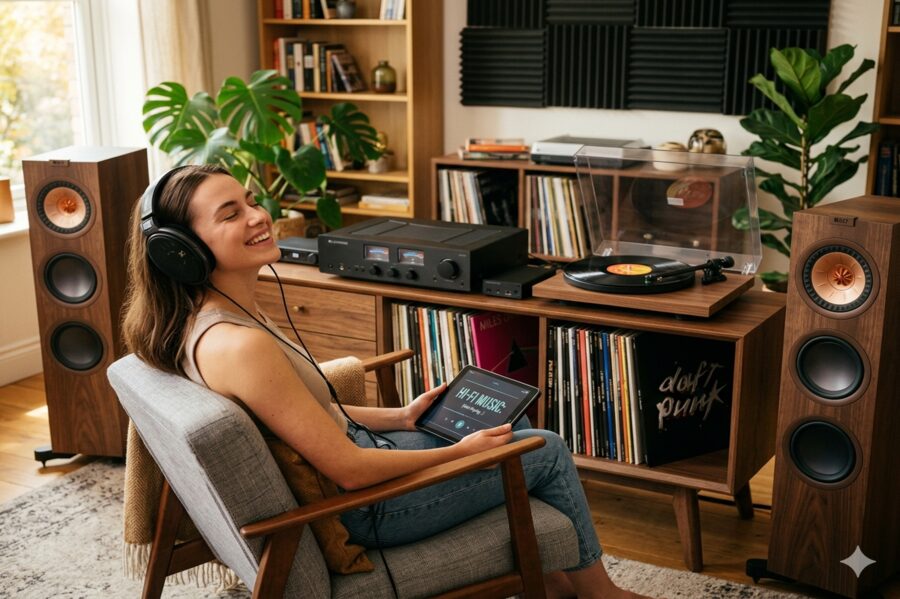
Have you ever listened to a song and felt like something was missing — as the music sounded flat, distant, or just… off? That feeling is more common than you think, and it usually comes down to one thing: audio quality. Most of us grow up listening to compressed music through cheap earbuds or low-end speakers, never realizing how much of the sound we’re actually missing. That’s where hi-fi audio changes everything.
Hi-fi, short for high-fidelity audio, is about hearing music the way it was meant to be heard — with every instrument, every breath, every subtle note reproduced as accurately and naturally as possible. Once you experience it, there’s no going back. At Ultimate Audio AZ, we help audio enthusiasts discover and build their ideal hi-fi systems. But before you invest in equipment, it helps to understand what hi-fi audio actually means and why it matters.
What Does “Hi-Fi” Actually Mean?
The term “high-fidelity” refers to audio reproduction that is faithful to the original recording. In simple terms, hi-fi audio aims to reproduce sound with minimal distortion, noise, and coloration—giving you the most accurate and lifelike listening experience possible.
The concept dates back to the 1950s and 1960s, when the hi-fi movement first took off. Back then, consumers were moving away from scratchy AM radio and early phonographs toward richer, fuller stereo sound. Today, hi-fi has evolved dramatically with digital technology, but the core principle remains the same: reproduce sound accurately and honestly.
When audiophiles talk about hi-fi, they’re referring to the entire signal chain—from the source (your music file or vinyl record) to the amplifier to the speakers or headphones. Every link in that chain matters, and a weakness at any point can affect the overall sound quality.
Hi-Fi Audio vs. Regular Audio: What’s the Difference?
You might wonder—isn’t all audio just… audio? Not quite. The difference between standard audio and hi-fi audio is significant, and once you hear it, you’ll understand why people become passionate about this hobby.
Standard audio is designed for convenience. Think of Bluetooth earbuds, laptop speakers, or even many mid-range home theater setups. These products prioritize portability and affordability over precision. The sound is compressed, the frequency response is limited, and the components are built to meet a price point rather than a performance standard.
Hi-fi audio, on the other hand, is built around accuracy. Hi-fi equipment is designed with higher-quality components, tighter tolerances, and better engineering. The result is a wider frequency response, lower total harmonic distortion (THD), better channel separation, and a soundstage that feels three-dimensional and alive.
The difference becomes obvious when you listen to a well-recorded jazz album through a proper hi-fi system. You can hear the room the musicians were in. You can hear the fingers sliding along guitar strings. You can close your eyes and feel like you’re sitting in the front row.
The Key Components of a Hi-Fi Audio System
Building a hi-fi system involves several components, each playing a specific role in the audio chain. Here’s a breakdown of what you’ll typically find in a hi-fi setup:
1. The Source
Your source is where the music comes from. This could be a turntable for vinyl records, a CD player, a digital-to-analog converter (DAC) for streaming or digital files, or even a high-resolution music server. The quality of your source material matters enormously — a poor-quality MP3 file will sound like a poor-quality MP3 file, no matter how good your speakers are.
2. The Preamplifier
The preamplifier, or preamp, takes the signal from your source and prepares it for amplification. It controls volume, selects inputs, and can also affect the character of the sound. A good preamp keeps the signal clean and transparent.
3. The Power Amplifier
The power amplifier takes the signal from the preamp and provides the electrical power needed to drive your speakers. Amplifiers come in many types—Class A, Class AB, and Class D—and each has its own sonic characteristics. The amplifier is often where much of the personality of a hi-fi system comes from.
4. Speakers
Speakers convert electrical signals into sound waves. They are arguably the most important component in your system, as they are the final translator between electronics and your ears. Hi-fi speakers are engineered to reproduce a wide frequency range accurately, with tight bass, clear midrange, and smooth highs.
5. Cables and Interconnects
Often overlooked by beginners, cables play a real role in hi-fi audio. High-quality interconnects and speaker cables reduce signal loss, interference, and coloration. They won’t transform a mediocre system, but in a resolving hi-fi setup, they make a noticeable difference.
What Is a DAC and Why Does It Matter?
A DAC — or digital-to-analog converter — is a device that converts digital audio signals (like the ones on your phone or computer) into analog signals that your amplifier and speakers can use. Most devices have a DAC built in, but the quality varies enormously.
A dedicated external DAC is one of the most impactful upgrades you can make in a modern hi-fi system. It bypasses the inferior DAC in your phone, laptop, or streaming device and replaces it with a high-quality converter that preserves the detail and dynamics in your music. For anyone who listens primarily to digital music or streaming services, a good DAC is essential.
Understanding Headphone Hi-Fi
Hi-fi audio isn’t limited to floor-standing speakers and amplifier stacks. Headphone hi-fi — sometimes called “head-fi” — is a thriving segment of the hobby. A high-end pair of planar magnetic or dynamic driver headphones, paired with a quality headphone amplifier and DAC, can deliver a listening experience that rivals speaker-based systems at a fraction of the space and cost.
For apartment dwellers, late-night listeners, or those just getting started, a desktop hi-fi headphone setup is a fantastic entry point into the world of high-fidelity sound.
How to Start Your Hi-Fi Journey
Starting with hi-fi audio can feel overwhelming given the sheer variety of equipment, terminology, and opinions out there. Here’s a simple way to approach it:
Set a realistic budget. You don’t need to spend a fortune to get into hi-fi. Even a modest budget can get you a meaningful upgrade over consumer-grade audio gear. The key is to spend wisely, not abundantly.
Start with the speakers or headphones. Your transducers — the things that actually make sound — have the biggest impact on your listening experience. Invest well here before anything else.
Focus on your source quality. Use lossless or high-resolution audio files when possible. Services like Tidal, Apple Music Lossless, and Qobuz offer CD-quality or better streaming. Good source material unlocks the potential of your hi-fi system.
Listen before you buy. Hi-fi is deeply subjective. What sounds good to one person might not suit another. Wherever possible, audition equipment before purchasing.
Upgrade gradually. Hi-fi is a journey, not a destination. Start with a solid foundation and upgrade individual components over time as your ears and budget allow.
Why Hi-Fi Audio Is Worth It
Some people hear the words “hi-fi audio” and assume it’s an expensive hobby reserved for obsessive audiophiles. And while it’s true that the hi-fi world can go deep — very deep — the entry point is much more accessible than most beginners expect.
More importantly, hi-fi audio gives you something that convenience-focused audio never can: an emotional connection to music. When you hear a recording with real clarity and depth, music stops being background noise and starts being an experience. Artists, producers, and engineers spend enormous time and care crafting recordings with subtle details that most playback systems never reveal. Hi-fi audio lets you hear their full intent.
At Ultimate Audio AZ, we believe that great sound shouldn’t be a secret reserved for insiders. Whether you’re just beginning your hi-fi journey or looking to upgrade your existing system, we’re here to help you find the equipment that brings your music to life.
Final Thoughts
Hi-fi audio is ultimately about respecting music. It’s about building a system that honors the work of the artists, the engineers, and the musicians who put their hearts into a recording. When you invest in hi-fi, you’re not just buying equipment—you’re opening your ears to a whole new world of listening.If you’re ready to explore high-fidelity sound, browse our carefully curated selection of hi-fi audio equipment at Ultimate Audio AZ. From entry-level setups to audiophile-grade systems, we have everything you need to start hearing music the way it was meant to be heard.